A month before the listing, the request from the founder was one line: "we need more noise". The project was weeks away from a major exchange listing, the chat was already speculating, and noise felt like the obvious answer. We asked for six weeks of silence first. Here is what those weeks were for.
The noise always comes with questions
A listing guarantees attention, and attention guarantees questions. Who is the team. Was the contract audited. What happens to the supply. Why did the price move before the announcement. If the public record has no answers, the answers get written anyway: by Telegram channels chasing engagement, by Reddit threads, by AI assistants summarizing whatever ranks highest. Those versions are rarely kind, and they stick.
So the real question was never "noise or silence". It was: when the questions arrive, does a public answer already exist, dated before the question?
Weeks 1-4: the base
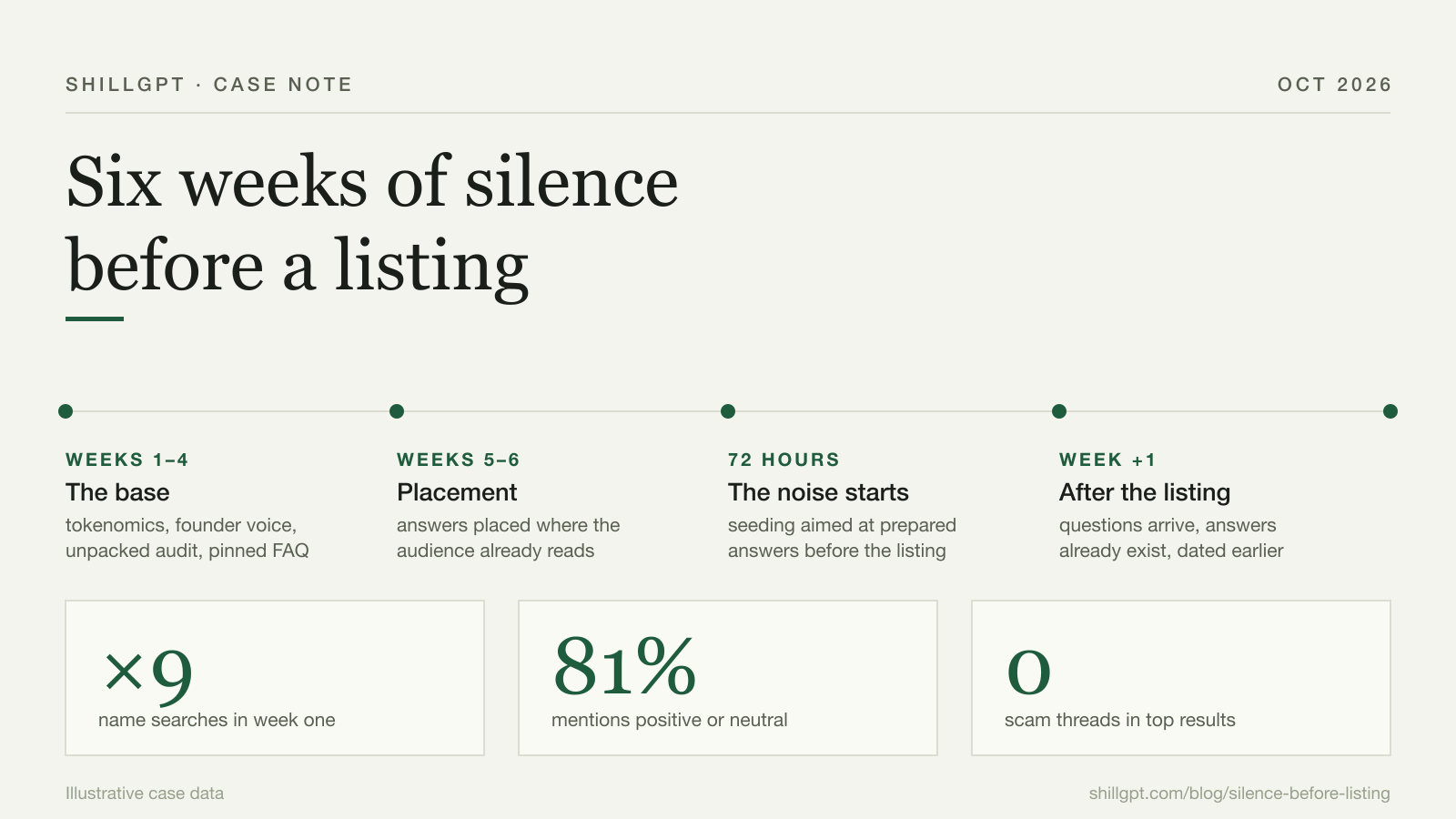
Four weeks went into material that does not look like marketing. A tokenomics article written by the team in plain language, with the numbers everyone was guessing about finally in one place. A founder interview long enough to put a voice and a face behind the project. The audit unpacked for normal readers: what was tested, what was found, what got fixed, without the legal armor. And thirty frequently asked questions, answered in public and pinned where the project's actual audience reads, not where the team prefers to post.
None of this trends. All of it gets quoted. Loud content expires in days; useful content gets linked every time the topic comes up.
Weeks 5-6: placement
A base on your own domain changes nothing by itself. The next two weeks went into placement: the answers next to the questions already being asked, summaries in the channels where the audience already reads, the founder's voice in two long-form formats instead of twenty compressed ones. Each piece pointed back to the source, so one search from any thread landed on the team's own version of the facts.
The 72 hours before
The noise campaign started 72 hours before the listing. By then it had something to land on. Seeding, threads, the founder's own channels: every push pointed at prepared answers, not at a blank search results page. People who got curious had somewhere to arrive.
The first week after
The numbers from the first seven days: search volume for the project's name went up nine times. Of the mentions we tracked, 81% were positive or neutral. And the top search results contained no "is this a scam?" thread. The question appeared, got answered by the base within hours, and never ranked. That last line is the one the founder noticed most.
What made it work
Nothing here was clever. The whole advantage was order: answers written before the questions, placed where the audience already was, then noise on top. A listing compresses your entire reputation into one week of public reading. In the final 72 hours you can only spend what was deposited in the weeks before. Six weeks of boring work is cheap at that exchange rate.
Want this for your product? Start with a short request on the contacts page or send the full onboarding brief.