New clients almost always ask the same question first: when will it change? The honest answer is that month one is not about change. It is about making change measurable. Here is the actual sequence.
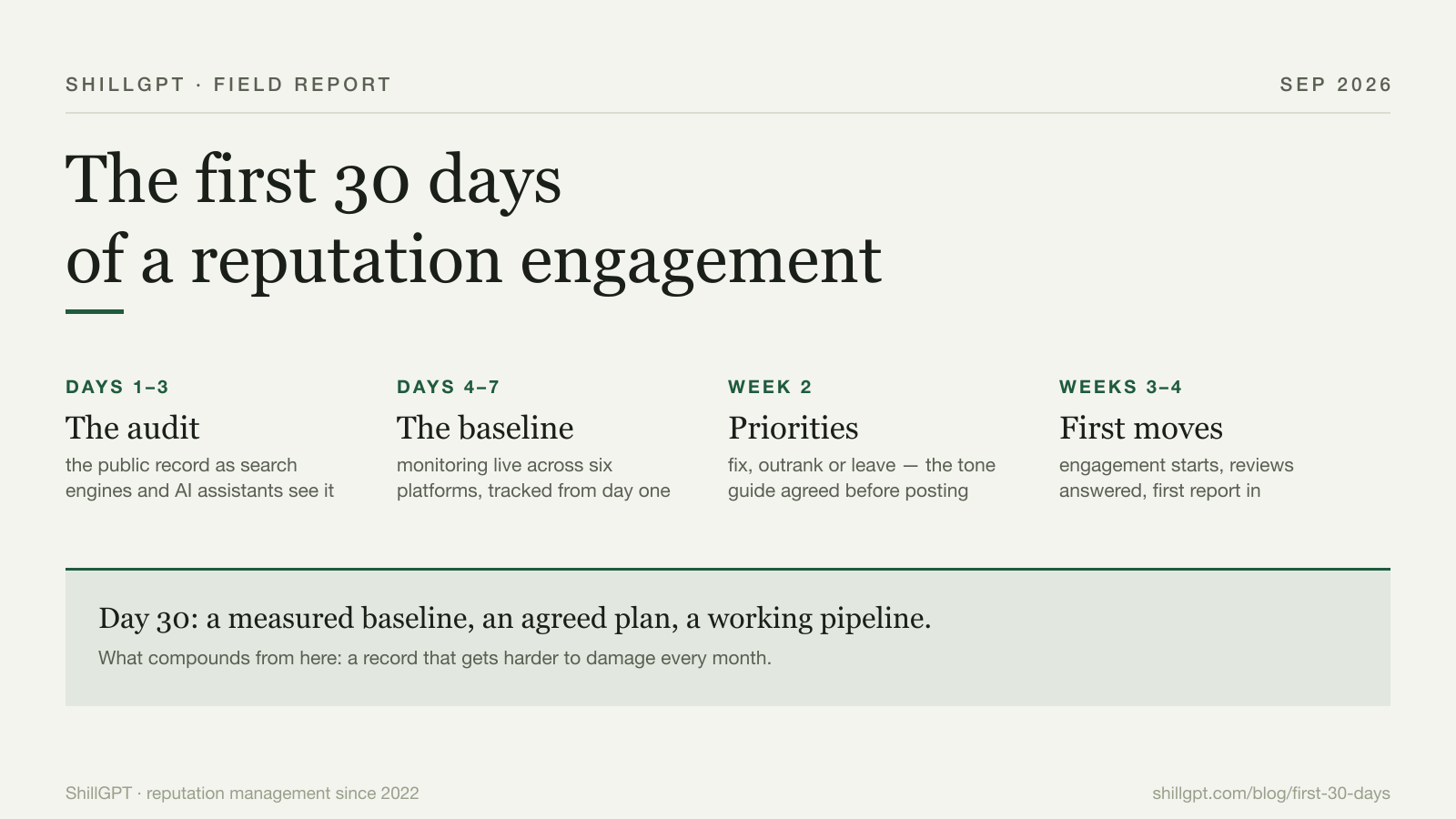
Days 1-3: the audit
We map the public record: what ranks for your name, which threads and posts get quoted, what the review scores look like, where the gaps and contradictions are. The output is a document you can argue with: a map of your reputation as search engines and AI assistants see it, not as the team remembers it.
Days 4-7: the baseline
Monitoring goes live across six platforms, with sentiment and share-of-voice tracked from day one. A baseline is what separates "it feels better" from "it changed, here is the number". It also switches on the early-alert channel: the first call you get is usually about a thread heading the wrong way.
Week 2: priorities
Together we sort everything into three piles: fix (false claims, broken profiles, unanswered reviews), outrank (legitimate content that should sit above the noise), and leave (true criticism, answered rather than buried). The tone guide is agreed in this week, before anyone posts anything.
Weeks 3-4: the first moves
Engagement starts in the communities we selected together. Reviews get answered. The first pieces of supporting content go out. The first report arrives with actions and effects in the same table, so nothing is taken on faith.
Day 30: what you actually have
A measured baseline, an agreed plan, a working pipeline and a direction. No magic, no promises of instant silence. What compounds from here is the part that matters: a record that gets harder to damage every month. The practices behind each stage are on the services page.
Want this for your product? Start with a short request on the contacts page or send the full onboarding brief.